
In tribute to the United States’ 250th anniversary, we are shining a light on Freemasons who served our country throughout its history. Our fraternity’s legacy is woven into the American story—not just at its founding, but in every era where courage and leadership were required. Join us as we profile ‘Brother Patriots’ from across the decades who proved that a commitment to the Craft and a commitment to Country go hand-in-hand.
Freemasonry counts among its members many of the men who helped shape the course of American history. From statesmen and innovators to soldiers and patriots, Brothers of the Craft have long answered their nation’s call with courage and conviction.
Among them stands Brother John Archer Lejeune — a decorated combat leader, the 13th Commandant of the United States Marine Corps, and one of the most influential military figures of the early twentieth century.
Often remembered as the “greatest of all Leathernecks,” Brother Lejeune earned that distinction not only through battlefield success, but through steadfast discipline, moral clarity, and a deep belief in the power of unity among men. Less widely known, yet equally meaningful, is that he was a devoted Freemason.
Early Life: From Louisiana to the Marine Corps
Born in 1867 in Louisiana, Lejeune came of age in a nation still rebuilding after the civil war. He graduated from the United States Naval Academy in 1888 and soon entered the United States Marine Corps, beginning a career that would span more than four decades of American military evolution.
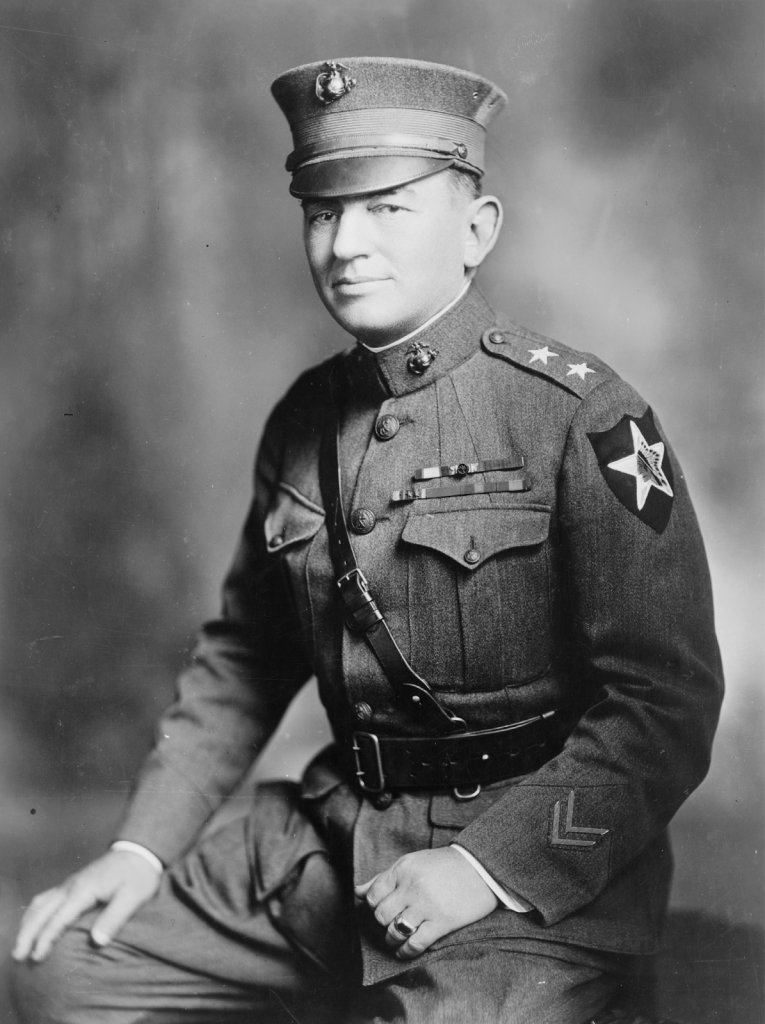
Throughout the Spanish-American War, Caribbean interventions, and the Philippine campaign, Lejeune steadily developed a reputation not only for tactical competence but for composure and fairness. Those who served under him described a leader who expected discipline but inspired loyalty, a balance not easily achieved.
His Masonic Journey
In 1919, while serving in Europe following the end of World War I, John A. Lejeune took his first step into Freemasonry. Stationed in Coblenz (Koblenz), Germany, he joined Overseas Lodge No. 1, a lodge established to serve American military personnel stationed abroad.
The setting was fitting. In the aftermath of global conflict, among men who had endured hardship and sacrifice, Freemasonry offered structure, reflection, and fraternity. For a commander who believed deeply in discipline, unity, and moral responsibility, the Craft provided a familiar framework — one grounded in shared obligation and mutual respect.
After the war, Overseas Lodge relocated to Providence, Rhode Island, and was re-designated as Overseas Lodge No. 40, with Lejeune maintaining his membership. In the years that followed, he expanded his Masonic involvement, joining the Scottish Rite and later the Shrine in Washington, D.C.
Freemasonry was not a footnote in his life. It paralleled his professional philosophy: that strong institutions are built by men of character, guided by principle, and strengthened through brotherhood.
Leadership in World War I
World War I marked the defining chapter of John A. Lejeune’s military career. In July 1918, he assumed command of the U.S. Army’s 2nd Division, becoming the first Marine officer to lead an Army division in combat. It was a rare and significant appointment, reflecting the trust placed in his leadership at a critical moment in the war.
Under his command, the 2nd Division played a key role in the Battle of Saint-Mihiel and the Meuse-Argonne Offensive, helping break German lines during some of the largest and most consequential operations involving American forces. Lejeune emphasized preparation, coordination, and discipline, earning the respect of both Marines and Army soldiers under his charge.
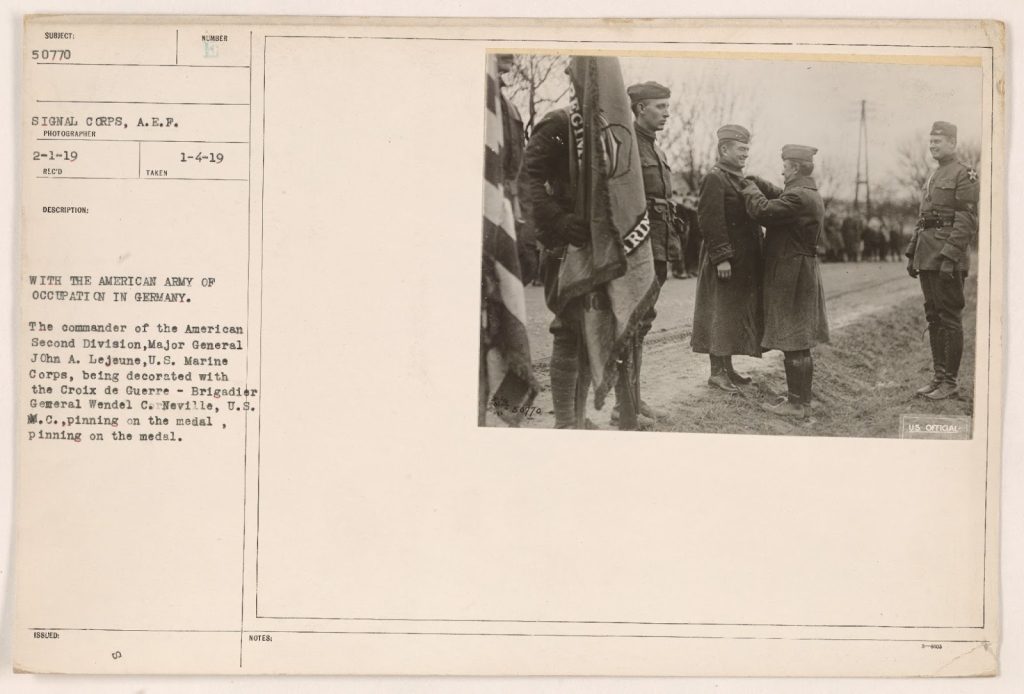
For his service, Lejeune received the U.S. Army Distinguished Service Medal and the U.S. Navy Distinguished Service Medal. The French government awarded him the Legion of Honor and the Croix de Guerre with Palm in recognition of his leadership during the Allied campaigns. These honors cemented his reputation as one of the most capable American commanders of the war.
Architect of the Modern Marine Corps
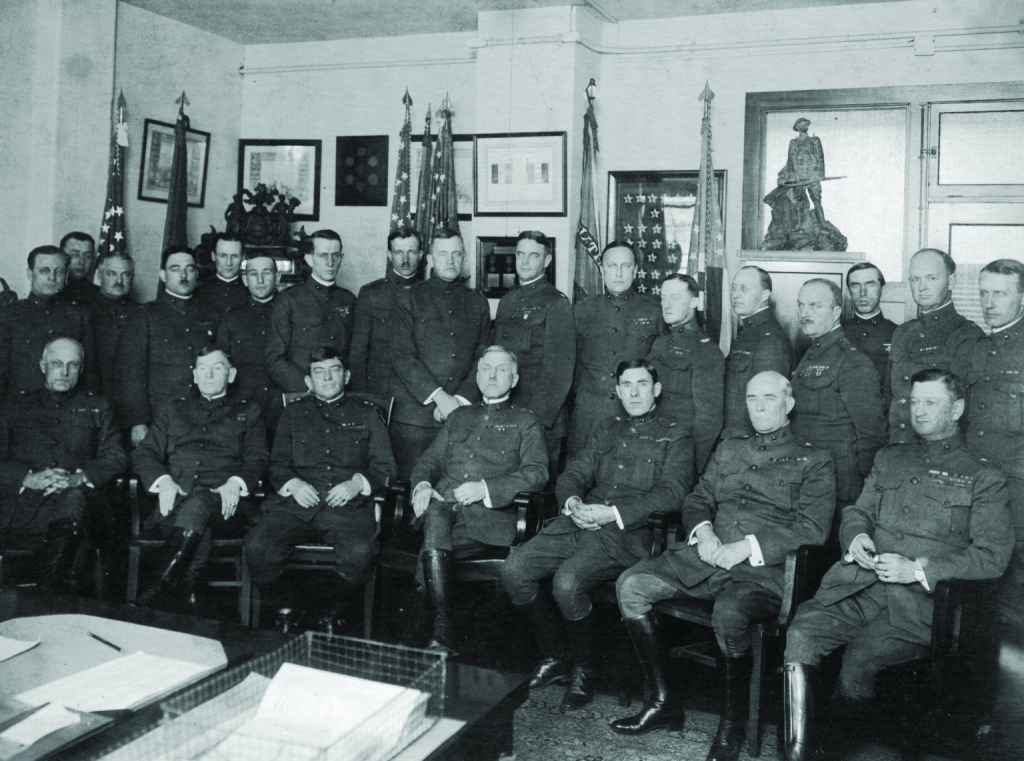
Brother Lejeune became the 13th Commandant of the United States Marine Corps in 1920. During his nine-year tenure, he strengthened professional military education, expanded and formalized training at Quantico, and reinforced standards that would prepare Marines for modern, large-scale conflict.
One of his most enduring contributions came in 1921 with Marine Corps Order No. 47, which formally established November 10, 1775, as the official birthday of the Marine Corps. In the order, Lejeune directed Marines to observe the date annually and reflect on the Corps’ history and traditions. More than a ceremonial gesture, it was a deliberate act of institutional identity-building—binding generations of Marines together through shared memory and purpose.
His influence extended to the physical and intellectual development of the Corps. Under his leadership, Quantico became the center of Marine education and doctrine, helping to professionalize the officer corps. The Marine installation at New River, North Carolina—later named Marine Corps Base Camp Lejeune in his honor—stands as further testament to the institutional foundation he helped build.
Lejeune understood that institutions endure only when they cultivate character. In this, his leadership echoed a central Masonic truth: men must be formed internally if the structures they build are to stand the test of time.
A Lodge Bearing His Name
In February 1925, the Grand Lodge of Virginia chartered Lejeune Lodge No. 350 in Quantico, Virginia, naming it in honor of Lieutenant General John Archer Lejeune. The lodge’s formation reflected the deep respect Masons held for his military leadership and his devotion to the Craft.
Lejeune attended the opening of the Provisional Lodge and spoke on the principles of Freemasonry — “tolerance, brotherly love, obedience to both human and Divine laws, and democracy.” He was later elected an honorary member. Situated within Marine Corps Base Quantico, the lodge quickly became home to many notable Marines, reinforcing a long-standing connection between the Corps and Freemasonry that dates back to Tun Tavern in 1775.
Nearly a century later, John A. Lejeune Lodge No. 350 continues to honor its namesake through its dedication to faith, hope, and charity.
A Legacy That Endures
Brother John A. Lejeune passed to the Celestial Lodge in 1942 and was laid to rest at Arlington National Cemetery. By the time of his passing, he had helped reshape the Marine Corps into a more professional, cohesive, and enduring institution.
Brother Lejeune’s life reminds us that great nations are not built solely by moments of heroism, but by men who commit themselves to steady, principled leadership over time. His enduring legacy proves that the lessons of Freemasonry are not confined to the lodge. When lived fully, they shape institutions that endure.
If you’d like to continue reading about Patriotic Freemasons, take a look at our blog on General Doolittle.